The Rise of the Home Bar
For decades, the dining table has been the centre of gathering, a dedicated space for shared meals, special occasions and family gatherings. But modern living is changing, and so are the ways we use our homes. Increasingly, homeowners are choosing to rethink traditional dining spaces in favour of something more flexible, social and design-driven: the home bar.
Across South Africa, from Cape Town to Johannesburg to Durban, home bars are no longer reserved for luxury homes or entertainment rooms. They are becoming an integral part of contemporary kitchen and home design, often replacing the dining table entirely.
At Easylife Kitchens, this shift is evident in showrooms and homes alike. The rise of the home bar reflects changing lifestyles, evolving social habits and a desire for kitchens that do more than just cook.
The Shift Away from Formal Dining
Modern households look very different from those of previous generations. Busy schedules, open-plan living and informal entertaining have reduced the need for a dedicated dining room, or even a traditional dining table.
Instead of set mealtimes around a large table, people now eat casually, often in smaller groups or at different times. Weeknight dinners, working from home, quick breakfasts and relaxed entertaining all call for flexible spaces rather than formal ones.
The home bar answers this need perfectly.
Why Home Bars Fit Modern Lifestyles
Home bars are not just about drinks anymore, they are multi-functional hubs designed for everyday life.
A well-designed home bar can be used for:
- Casual meals and snacks
- Entertaining guests
- Coffee stations and morning routines
- Working from home or homework sessions
- Socialising while cooking
Unlike dining tables, which often stand unused outside of mealtimes, home bars remain active throughout the day. This constant use makes them a more practical investment for many households.
In open-plan homes across Durbanville, Prospecton, Plettenberg Bay, and Stellenbosch, home bars help bridge the gap between kitchen and living areas, encouraging interaction without formal structure.
The Role of Open-Plan Living
Open-plan design has fundamentally reshaped kitchen layouts. As kitchens become more visible, homeowners want spaces that feel inviting, social and seamlessly integrated into the rest of the home.
Home bars naturally suit open-plan environments because they:
- Create a visual boundary without closing off space
- Encourage conversation between kitchen and living areas
- Reduce the need for separate dining furniture
- Enhance flow and movement
In areas like Zambesi, Centurion and Kramerville, where modern family homes favour open layouts, home bars have become a defining design feature rather than an add-on.
Entertaining Has Become More Informal
Entertaining styles have changed dramatically. Formal dinner parties are increasingly replaced by relaxed gatherings, shared platters, drinks and conversation centred around the kitchen.
Home bars support this shift by allowing hosts to:
- Prepare food while engaging with guests
- Serve drinks without leaving the kitchen
- Create a central social point in the home
Instead of guests being seated away at a dining table, everyone naturally gathers around the bar. This creates a more inclusive and relaxed atmosphere, one that suits modern entertaining far better than formal seating arrangements.
Space Efficiency in Modern Homes
As homes become more compact, especially in urban areas, space efficiency has become a priority. Large dining tables take up valuable floor space and are often underutilised.
Home bars, on the other hand:
- Require less space than traditional dining setups
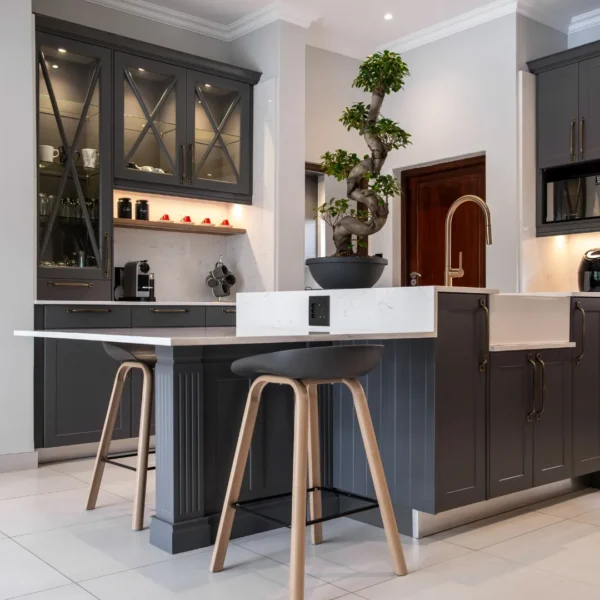
- Can be integrated into islands or peninsulas
- Offer seating without clutter
- Provide additional storage beneath
In city-based homes in Cape Town, Pretoria and Johannesburg, homeowners are increasingly choosing home bars as a smarter alternative that maximises functionality without sacrificing style.
Design Flexibility and Customisation
One of the biggest advantages of a home bar is its design flexibility. Unlike dining tables, which are typically fixed in size and function, home bars can be fully customised to suit individual lifestyles.
Popular design features include:
- Integrated wine storage
- Built-in beverage fridges
- Statement lighting above bar seating
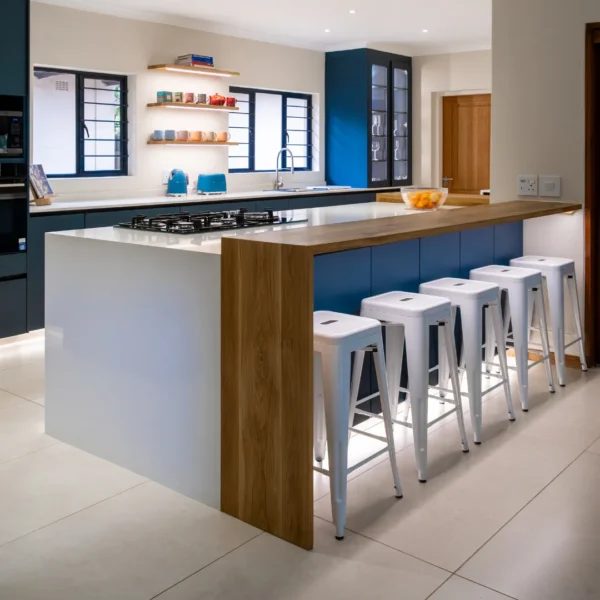
- Contrasting finishes to define the bar zone
- Hidden storage for glassware and accessories
At Easylife Kitchens, home bars are designed as part of the overall kitchen layout, not as an afterthought. This ensures they feel cohesive, intentional and tailored to the homeowner’s needs.
Home Bars Add Visual Impact
From a design perspective, home bars add immediate visual interest to a kitchen. They allow for contrast, texture and personality while maintaining a clean, uncluttered look.
Whether it’s a darker finish to anchor the space, a waterfall countertop or open shelving for display, home bars create a focal point that dining tables simply can’t match.
This is particularly appealing in homes where the kitchen is visible from multiple angles, a common feature in modern developments across the Western Cape and Gauteng.
Supporting Multi-Generational Living
Many households now accommodate multiple generations under one roof, each with different routines and needs. Home bars offer flexibility that traditional dining tables don’t.
They allow:
- Children to eat while parents cook
- Adults to work or socialise simultaneously
- Meals to happen without formal scheduling
This adaptability makes home bars ideal for real-world living, where structure is often replaced by fluid routines.
A Reflection of How We Live Today
The move away from dining tables isn’t about losing tradition, it’s about adapting to how homes are actually used today.
Home bars reflect:
- Less formality
- More connection
- Greater flexibility
- Smarter use of space
They support everyday life rather than special occasions only, which is why they continue to grow in popularity.
Kitchens Are No Longer Just for Cooking
The modern kitchen is a living space, and the rise of the home bar proves it.
As lifestyles become more informal and homes more open, home bars are stepping into the role once held by dining tables. They bring people together, maximise space and support the way families live, work and entertain today.
At Easylife Kitchens, home bars are thoughtfully designed to complement each kitchen’s layout, style and purpose. Whether you’re visiting a showroom in Cape Town, Durban, Johannesburg, Pretoria or anywhere across Southern Africa, the focus remains the same: creating kitchens that work beautifully for modern life.
If you’re rethinking your dining space, it might be time to think bar and not table.
Find your nearest Easylife Kitchens showroom today to start your design journey: https://www.easylifekitchens.co.za/showrooms/